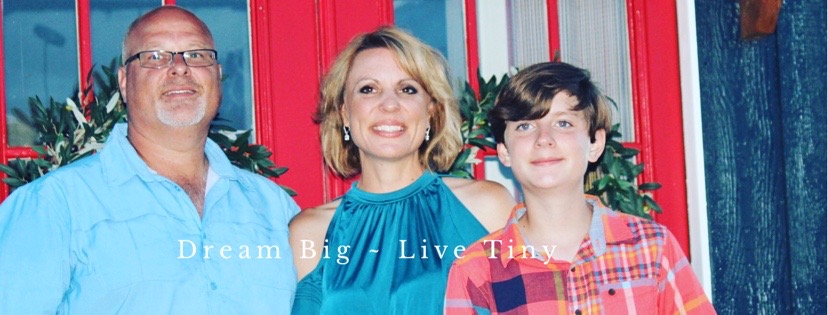
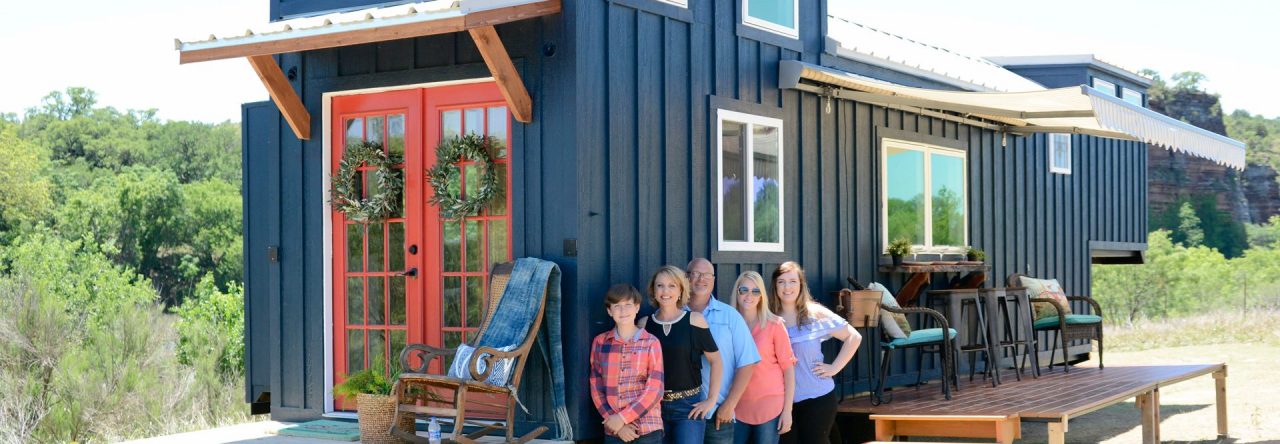
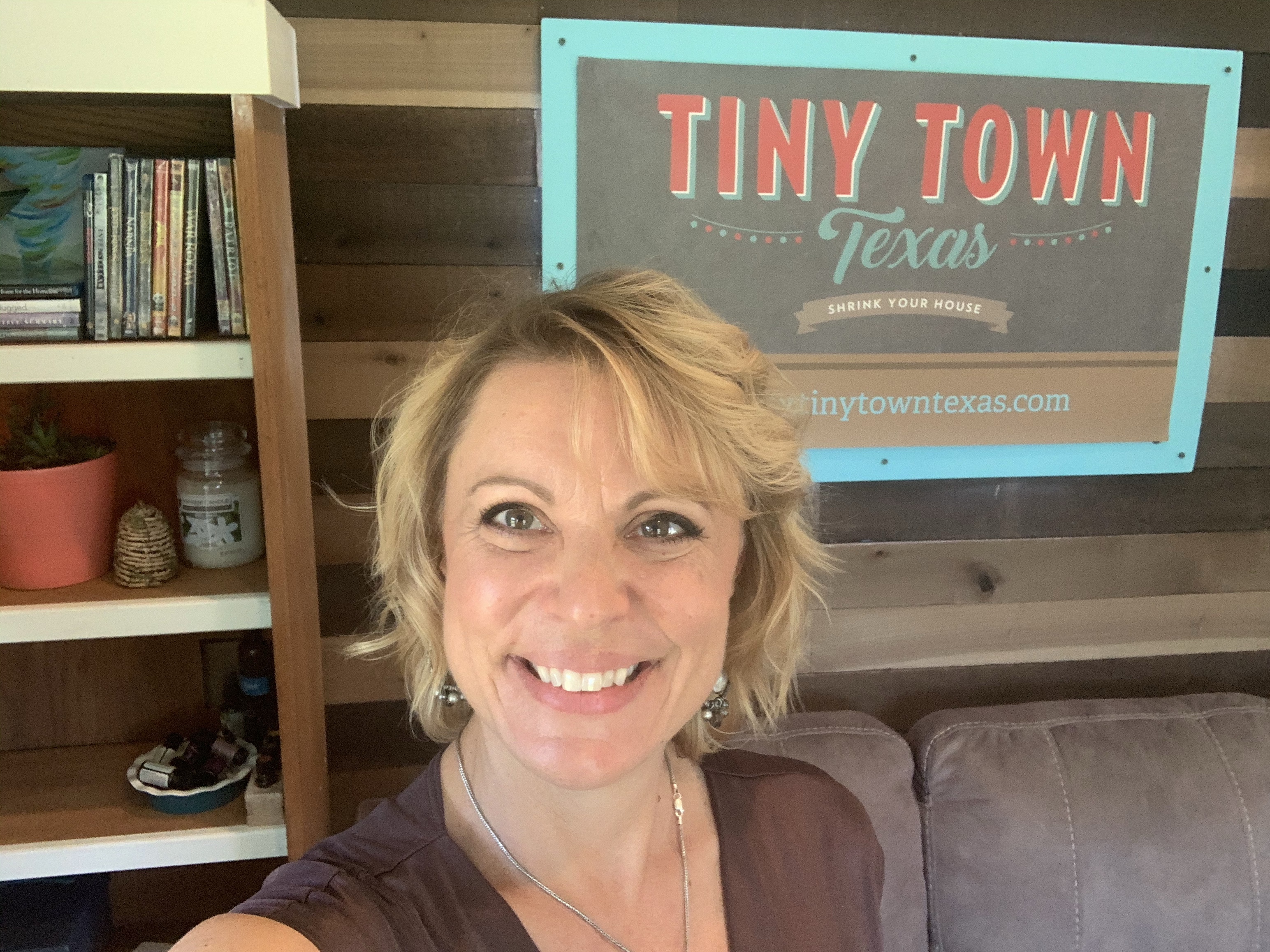
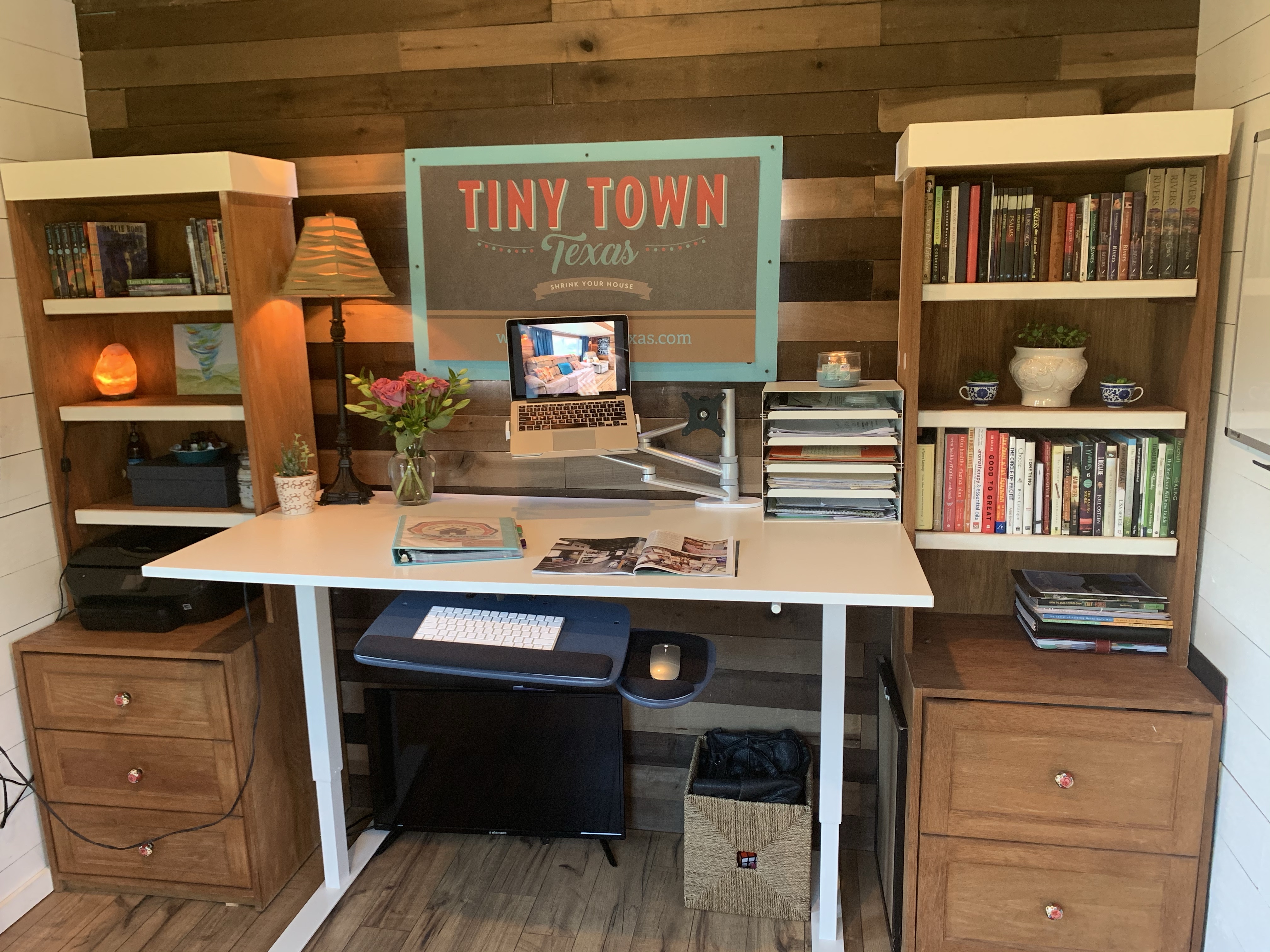
I am a self-proclaimed avacado-holic, cherished wife of Todd Snyder almost 23 years. Inside of Tiny Town, I’m the Chief Traffic Director and Hope Giver. “I dream it, he builds it and then I share it with the world!” We make a fantastic team! We build tiny homes and communities for families to thrive in for years to come. Our motto is, “Shrink your house, not your dreams”. We are blessed with three amazing kids: Elisabeth, 21, is studying nursing and getting married in June. Christianna, 20, is studying business and graphic design, living with family in Michigan. Andrew, 13, lives in the tiny house with us and when he’s not in school, he’s building tiny houses with his dad. Community info @ www.tinytowntexas.com.
My life mission is to dare people to believe the impossible is NOTHING with God! I’ve got some Big dreams I’ve been working on for twelve years. Watch them unfold in our blog.
My vision To be a part of a community of likeminded people working towards a common goal of creating and sustaining meaningful relationships that rock the world around you
Life motto He is my God; I trust Him
Favorite dreams quote “Your dreams should be so vivid that when you actually achieve them, you’ll feel as if you’ve already lived them.”
Favorite note “I can win with any hand I’m dealt” -God
Favorite songs I know my Redeemer Lives and Legacy
Life verse “To know Him and the power of His resurrection and to share in His sufferings, being made like Him” Phil. 3:14
My top values Leaving a legacy of Faith, Lots of intimacy with my husband, speaking life into my kids, spiritual and physical health, and friendships
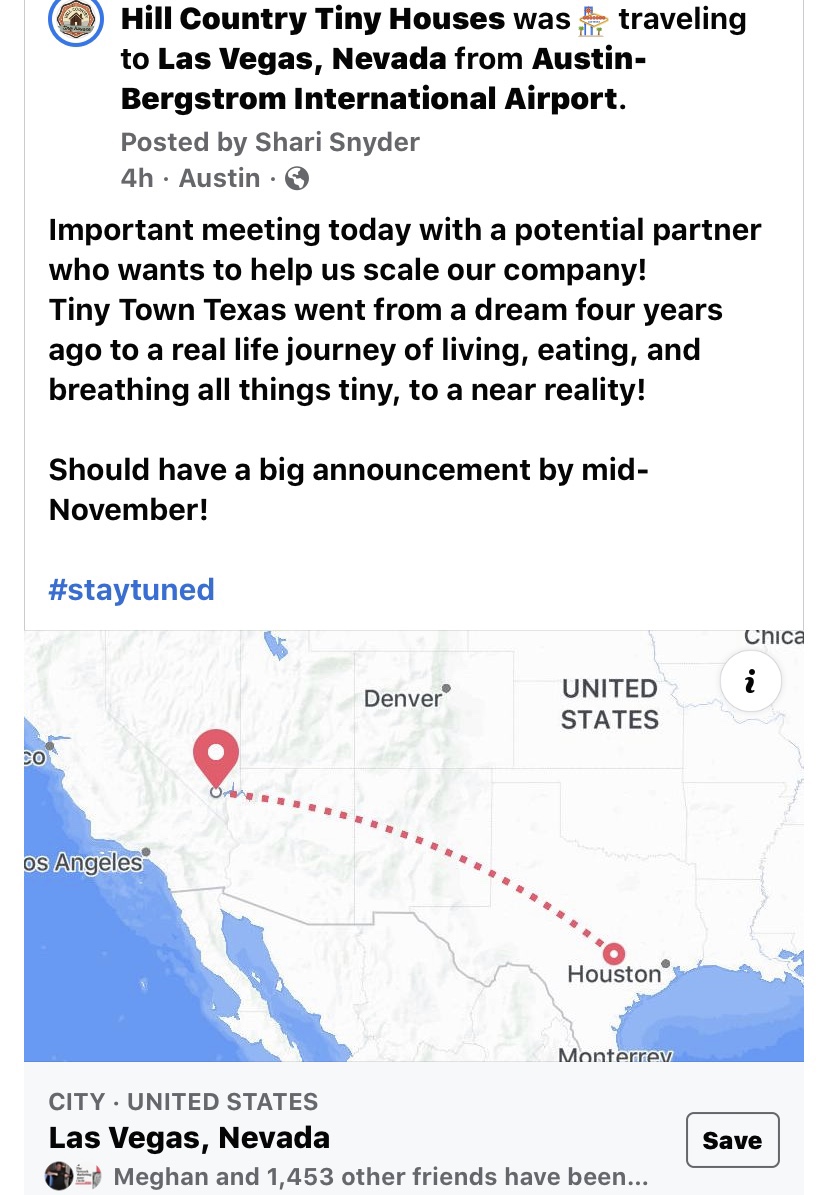
Important meeting today In Las Vegas, NV, with a potential partner who wants to help us scale our company! Tiny Town Texas went from a dream four years ago to a real life journey of living, eating, and breathing all things tiny, to a near reality!
SECO is a non-profit 501(c)(3) that helps U.S retired veterans thru the SECO Veterans Assistance Program, now in its second year!
The SECO Veterans Assistance Program’s Committee was created and is managed by members of the Navy, Marines, Air Force and Army. We look forward to building this fund and growing the program to continue providing assistance to veterans in need.
If you have a veteran in your community who needs help financing a home project, please contact Maryuri Barberan at (404) 355-5978.
We are So Proud of Clint! I agree with his wife! He’s the real deal! He has been one of our greatest cheerleaders on our journey to the tiny home community dream, offering help however he can, wanting nothing more than to see us succeed!
From his wife: “This guy right here is the read deal. Honest, bold, humble, and filled with more dreams than you could imagine. He loves people and helping them discover and build their dreams into reality daily. Congratulations my dear on your 40 under 40 award. I love you and love dreaming with you.”
Congratulations Clint Fiore, President and Founder of Texas Business Buyers for being a recipient of the First Annual Hill Country 40 Under 40 Award!
Clint is the Founder and CEO of Texas Business Buyers, LLC, an industry-leading, high-tech Mergers and Acquisitions / Business Brokerage firm located in Kerrville with a Texas-Wide footprint. TXBB has led dozens of transactions worth 10’s of millions of Dollars across the Hill Country and beyond since its inception just 5 short years ago. Clint and his team help Texans privately-held family businesses with a proven, scientific process of matching Buyers, Sellers, Investors, and Banks to build winning succession plans.
He also recently launched a joint venture in the Remote Bookkeeping and Accounting industry with his long-time friend and teammate Dusty Block, and a leading San Antonio-based Inc 5000 Financial Services company, PAX Financial Group led by CEO Darryl Lyons, as partners. This new Company, formerly a Texas Business Buyers’ acquisition known as Number Crunchers Bookkeeping, is being rebranded as “Show Ready Books”, and has a vision to ‘liberate burdened leaders with great numbers.’ Clients of S.R.B. will have a dedicated remote day-to-day bookkeeping and accounting team to always make sure their financials are “show-ready” for their CPA, partners, banks, investors, or an acquirer.
Clint also founded Hill Country Pitch Day, the premier business pitch event in the Hill Country which provides a curated forum for pre-screened Texas entrepreneurs looking for expansion or startup funds to make their case on stage to hundreds of local angel investors.
He also serves on the boards of the Kerrville Economic Development Corporation and the Kerrville Area Chamber of Commerce. Clint is also a flight instructor and commercial-rated pilot with an aircraft at Kerrville Municipal Airport and holds a degree in Professional Aeronautics from Embry-Riddle Aeronautical University.
Clint is most proud of his family; Melissa (wife) and their four children: Amelia, Sophia, Cecilia, and Jetson.
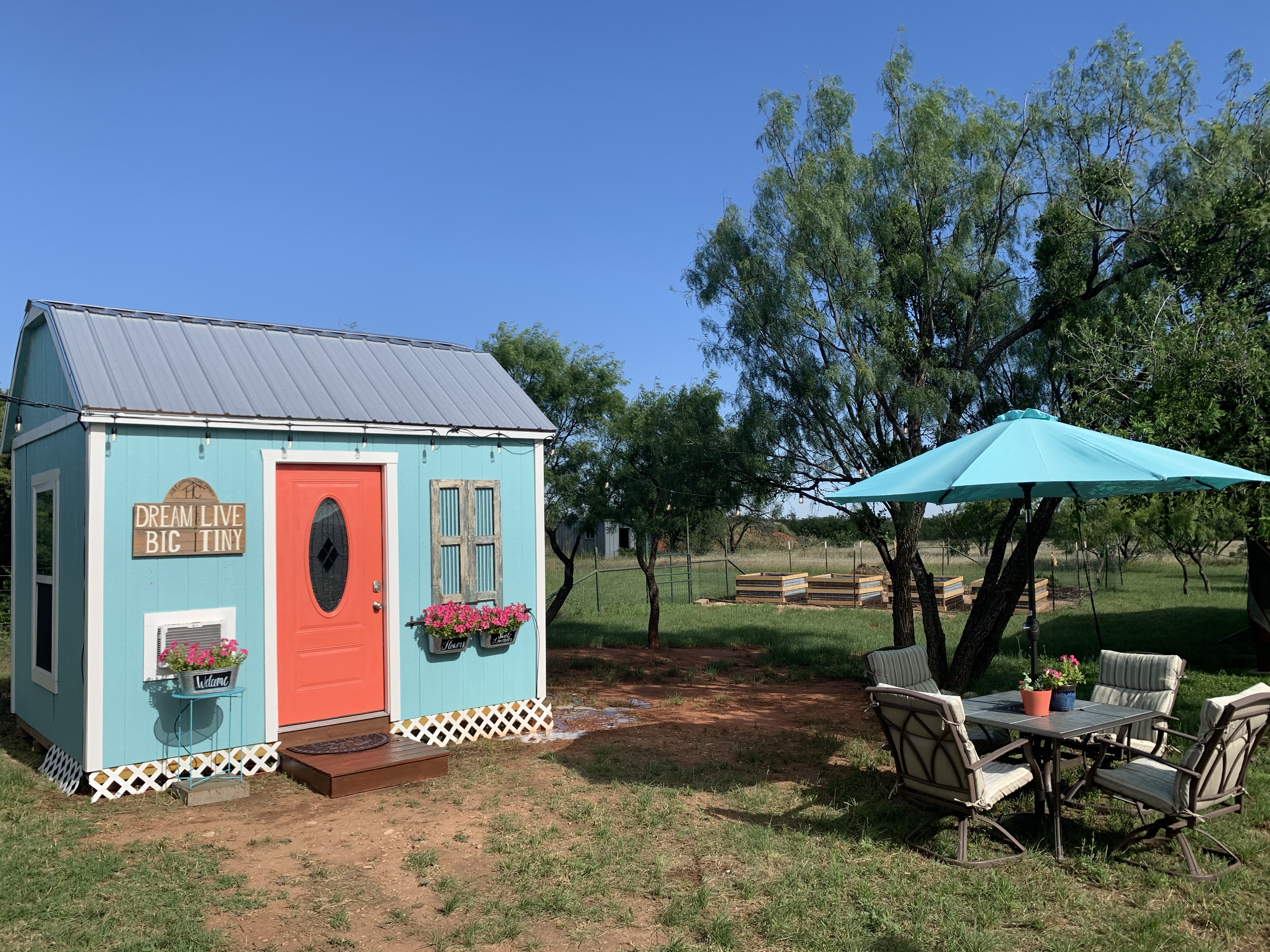
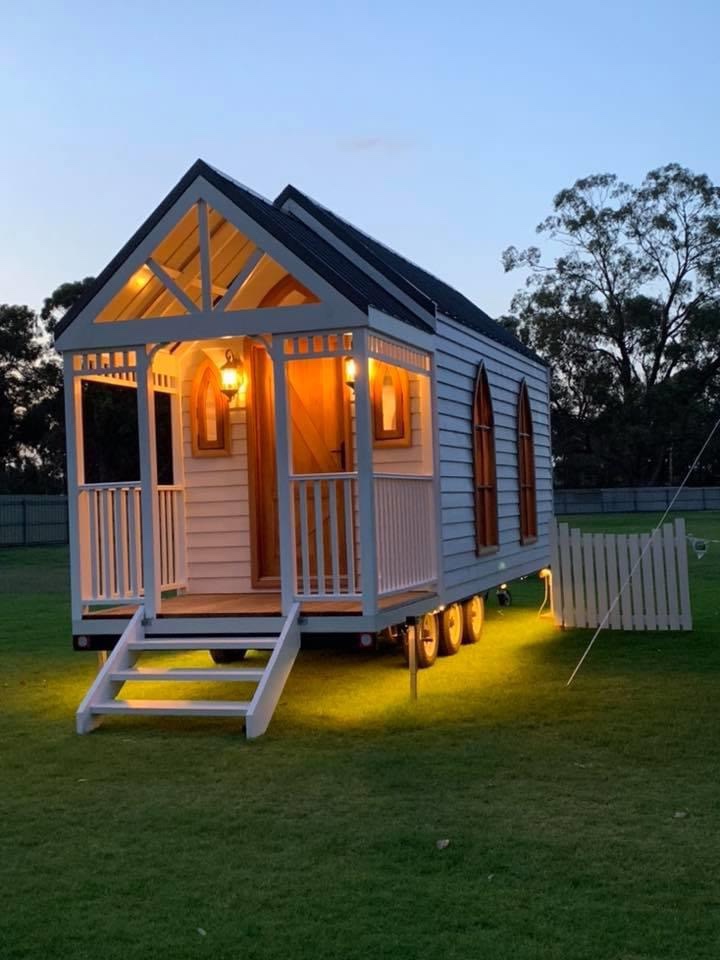
I’m sure you’re beginning to realize, as people all across the country are, that Covid isn’t something that is just going to disappear. It’s changed our society and the way we operate; for some that means working from home every day, for others it means needing a new was to de-stress and decompress. That’s where we come in, with the Tiny Enterprise. A high-quality ‘shed’ that can be anything and everything. Whether you need a quiet place to work every day away from the chaos, a studio to embrace your love of arts and crafts, a workout room to stay in shape, or maybe just a space where you can go to relax and unwind, we can help. Model seen here starts at $13,500.00 and can be built and delivered in 45 days. Financing options available including rent to own.
We even had a winery owner approach us with the idea of building Tiny Enterprises on his property to use as private tasting rooms. So really the limits are endless with this type of building. If you can dream it, we can build it. Ready to create your own Tiny Enterprise and have your own personal productivity center or relaxation oasis?
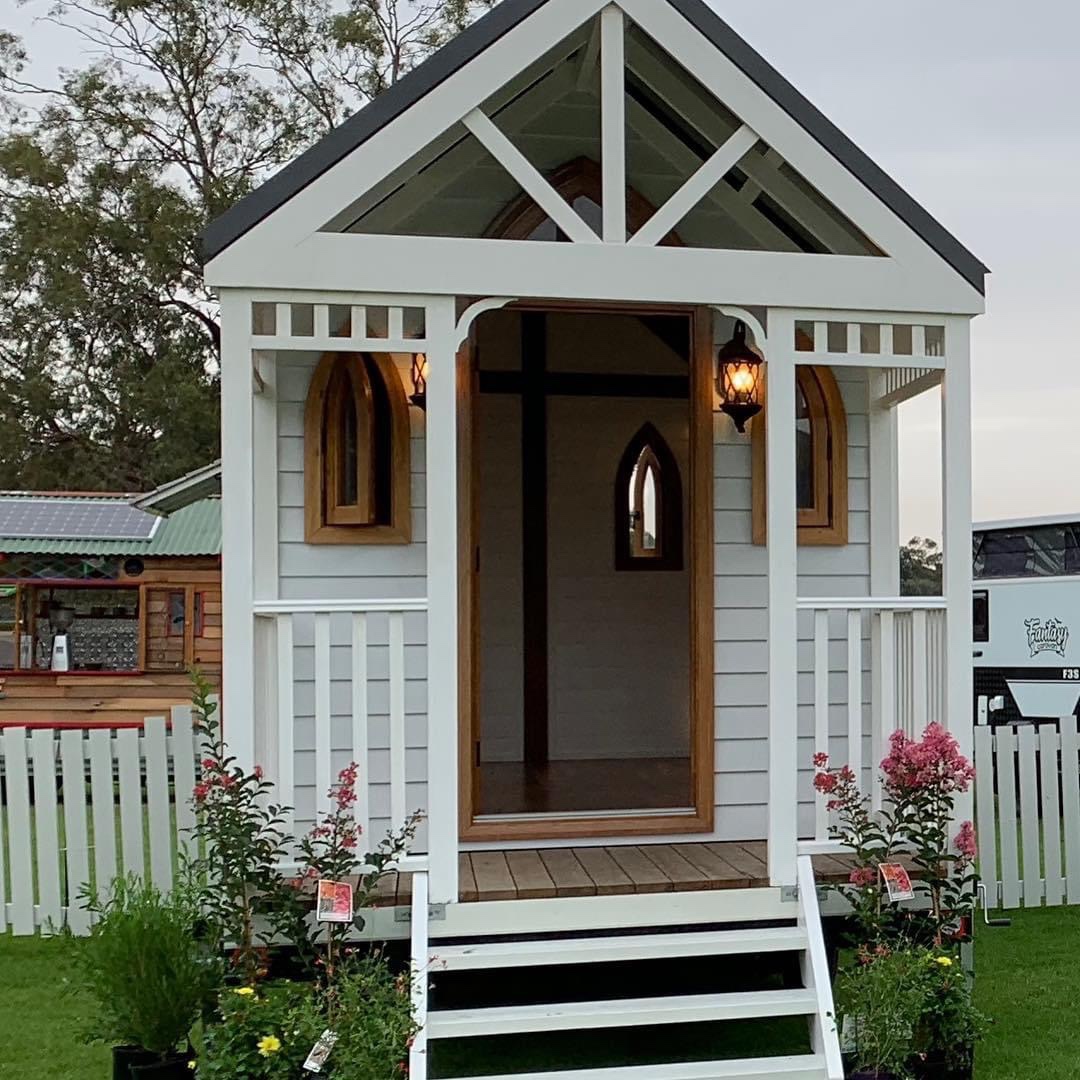
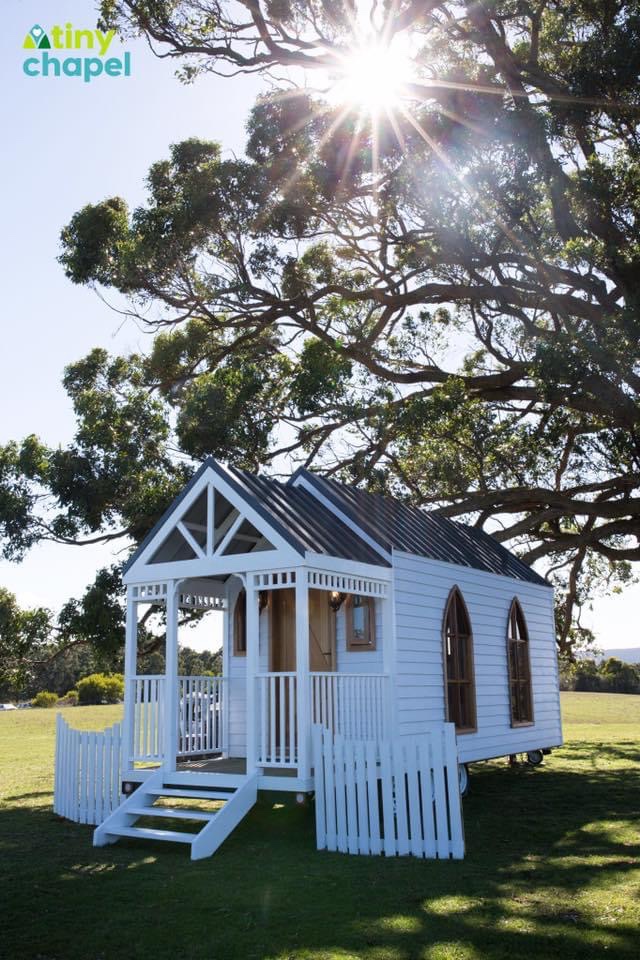
It’s official! Hill Country Tiny Houses has been contracted to build a tiny wedding chapel on wheels for Tracy, a very brilliant female entrepreneur in the hill country!! We love tiny enterprises! Innovative solutions to today’s health and economic problems, including unnecessary overhead!
Let’s show the world better ways to serve!!
This vision is so win-win! When parents take out a second mortgage to pay for a wedding, something needs to Change!
Often small intimate weddings can be even more enjoyable, particularly for the bride and groom! The Tiny house movement is about minimalism, simplicity, Freedom, and being Fiscally responsible!!!
After Treehugger wrote about a tiny home community in Tampa Bay, Florida, the developer of the project, Dan Dobrowolski, was depressed. I had forgotten to advise him that commenters can be harsh, particularly if they are not our wonderful Treehugger regulars. The post was very popular and got a lot of comments, many complaining about costs. This has been the case with every tiny house post I have ever written, and was also the case when I was trying to sell a green modern tiny house many years ago.https://cd0c40238a4927d156c7bb6805089daa.safeframe.googlesyndication.com/safeframe/1-0-37/html/container.html
Tiny houses started with a fantasy: that you could build a little place of your own and park it somewhere and live a tiny life with almost no money. There indeed are people who have done this, but land is expensive, as are niceties like water and a sewer connection. That’s why after I bombed out of the tiny house biz, I wrote that “the only way the tiny house movement is going to succeed is if people get together and build intentional communities of tiny houses.” I was a big fan of the trailer park economic model, where you own the house but rent the land, because all the base costs of land and services are shared, so the costs are much lower.
This is the problem Dan had with the comments, where people were saying that they could go out and buy a house or a condo for the price of one of his tiny homes. Dan felt he had to clarify:https://cd0c40238a4927d156c7bb6805089daa.safeframe.googlesyndication.com/safeframe/1-0-37/html/container.html
Specifically, many want to make the comparison between units in a community like ESCAPE Tampa Bay and a condo or home in terms of costs and expenses. They are vastly different. The only cost, other than power and internet, for a unit in our community is a monthly lot rental…this varies from $400 – 600.
That lot rental fee includes property taxes, water, sewer, garbage pickup, parking, exterior maintenance, landscaping, and on-site management. There are also onsite amenities like the office space.
And as for the comparison to an apartment, this one is simple. In addition to savings on some of the items listed above, when your lease is up on an apartment, you have nothing, your money is gone. With one of our units, you own it. Plus the monthly cost for one of our units in Tampa is LESS than the average apartment rent in the area. Renting seems a very bad deal in comparison.
This is not meant to be a free advertisement for Escape Tampa Bay. But it is an attempt to point out that ever since the start of the tiny house movement, it has been complicated. Ben Brown wrote almost a decade ago about his experience living in a community of tiny homes (Katrina cottages, not Tiny Homes on Wheels) and the three lessons he learned:
They cannot just be dropped anywhere. “They need small-lot site-planning and the company of friends.”
They need to be really well-designed and well-built. “When you compress the volume, the first thing to go is wiggle room for sloppy decision-making. Compromise on design and construction quality, including material choices, and you’re off to the race to the bottom.”
It takes a town. “No problem feeding the private, nesting impulse with cottage living; but the smaller the nest, the bigger the balancing need for community.”
Ben Brown was living in a cottage community within a quarter-mile of resources like supermarkets, bars, and a YMCA. ESCAPE Tampa bay is not; its location gets a Walkscore of 26 and the only restaurant within walking distance is an IHOP, so this is not a car-free paradise.
Tampa Bay Village. Tampa Bay Village
But it is a community. It does provide the necessary services and a framework of support. Yes, the cost per square foot is high; it always is when you use quality materials and details, and you build to last. As Ben Brown said, “Better to achieve the savings by intelligently compacting the space, as opposed to competing with production builders who amortize prices per square foot over thousands of under-performing square feet.”
The Katrina Cottage where Ben stayed was supposed to be the start of a movement. I wrote at the time that “we are on the cusp of a revolution, where small, efficient and affordable houses on narrow lots in walkable neighborhoods will be the new normal and the new hot commodity.”
I really did think the tiny house would be part of this revolution, but it didn’t happen, perhaps because people didn’t understand it; they thought that if they are getting trailer-sized homes then they should be paying trailer-like prices; and the reverse, if they are paying ESCAPE prices, they should get a house. But it doesn’t work that way in the real world. (Ben Brown had his own take on why the Katrina Cottage revolution didn’t happen.)
This is why I am still excited about the ESCAPE project; perhaps it is revolution time. You can get a high quality, well-designed home that’s built to last, and like everything in life, you get what you pay for. It is not a trailer park but in a tiny home community. They are two different things, serving two different markets.
Dan started his note to me saying “sadly, I feel I did a poor job explaining some things for your readers.” But frankly, many of us have been doing a poor job explaining things since tiny houses started, because nobody was quite sure what they were: Are they trailers? Are they houses? Where do I put one?
Dan Dobrowolski may not have explained these things in words, but he is demonstrating it on the ground, and that is far more important.
If you’re thinking about downsizing in a big way, here’s how to buy a tiny house and simplify your life.
You’ve probably read news stories about tiny homes – the miniscule, 150-square-feet houses (a few hundred square feet at most) that promise a simple lifestyle and affordable living. If the promise of drastically reduced utility bills and the forced simplicity (no room for clutter) appeal to you, here’s how to purchase a tiny house or build your own.
How to Buy a Tiny House
You have a few options for buying a tiny home. You can find one that is already built on land, you can purchase land and then buy or build a tiny home to put on it, or you can buy a tiny home that is mobile and camp with it temporarily.
You can browse tiny house listings on Redfin.com; simply search for homes in a specific area, and then use the filter options to set “500” as the maximum square footage. To filter out condos and townhomes in your search results, make sure that you unselect all of the boxes under Property Type except for “Homes.” If a tiny home is listed on the multiple listing service or on for-sale-by-owner sites, it will show up in your search results on Redfin. Keep in mind that you’ll find more tiny homes for sale in rural areas than within a city, so if you don’t see any in your results, try broadening your search area.
How to Buy Land for a Tiny House
The other alternative is to buy an empty lot of land and then put a tiny house on it. To search for land for sale on Redfin.com, uncheck all of the boxes under Property Type except for “land.” If you’re planning to live in your tiny house full-time, you’ll want to look for land with water and septic systems already in place; most listings will mention this in the property description.
If you’re planning to live off the land, with a vast garden for growing fresh vegetables and ample room to explore the wilderness, consider purchasing a few acres or more. Be aware that you’ll need permits to construct a home on vacant land, particularly if the land has never had a residential property.
In some cases, you may not be eligible to build a tiny home on vacant land and may need to build the tiny house as an accessory dwelling unit. An accessory dwelling unit, or ADU, is a secondary residential unit built on a property that already houses a single family home. Your options vary by state and city, so it is important to do thorough research prior to buying land.
Once you’ve purchased property, you can build or buy a tiny house. There are several builders who specialize in tiny homes and can build one with just the basics or with move-in ready furnishings. Most tiny homes are built on trailers, so you can pick one up with a truck and haul it anywhere, but some are set on foundations like a traditional home. Prices range from $8,000 to $150,000, depending on the quality of materials and custom finishes.
How to Build a Tiny House
If you’re looking through tiny house listings and decide you don’t want to buy a tiny house, you can build one. You can do this on your own or with the help of a contractor who specializes in these types of structures. Building a micro home is a multi-step process that entails a lot of planning. You’ll need to:
Select a suitable site and finalize the purchase of your land.
Draw up a rough floor plan with must-have features.
Decide if you need sewer and septic hookups, or if you’ll bring water in and out on your own.
Decide if you need electricity, or if solar power is an option.
Purchase or draft your final plan.
Consult with builders and establish your budget.
Acquire proper permissions (right-of-ways, etc.) and the appropriate permits.
If you use salvaged materials and build the home yourself, you could spend as little as $8,000. But it takes a lot of time and know-how, especially if your home has electricity and plumbing.
Where to Park a Tiny House
If you have decided on buying a tiny house on wheels, then you’ll need to understand where you are allowed to park your home. Depending on your location, there may be tiny home communities where you can rent or purchase a space to park your home. If your tiny home is legally considered an RV then you can park it in an area zoned for RVs.
How to Finance a Tiny House
While researching how to buy a tiny house, you may wonder what loan options are available. As tiny homes are not large enough to be considered a single family home, they typically do not qualify for a traditional mortgage. However, there are other financing options to look into before you buy a tiny house.
RV loan: If you plan on buying a tiny house on wheels, you may qualify for an RV loan. These loans tend to be lower in interest, but your tiny home will have to be verified as an RV in order to secure financing. Similarly, you may also qualify to take out a travel trailer loan from your credit union.
Personal loan: Tiny homes are often considered personal property so you might consider taking out a personal loan to buy a tiny house. It is important to consider that personal loans are often unsecured compared to a traditional secured mortgage, so you won’t have to put up collateral in case you default on a payment. However, you’ll likely have a higher interest rate with a personal loan.
Peer-to-peer lending: Since you’re joining a community of tiny-home owners that likely share similar values, there are often people out there willing to loan money to those planning on buying a tiny house. There are many sites that can connect you to investors willing to loan you money to buy a tiny home. Generally, the terms of these loans are determined by the investor along with your credit score.
How to Live in a Tiny House
Living in a tiny house means living a minimalist lifestyle. If you love experiences and spend a great deal of time outside of your home or traveling, you don’t need much square footage to live in other than the basics. That’s the premise behind the tiny house movement.
If you’re downsizing from a larger home, you’ll need to rid yourself of much of your belongings. A large dining room table that seats 12 is not likely to fit in your micro home. Consider giving these items away, donating them to charity, or hold a moving sale.
You’ll need a strong commitment to organization in order to make tiny-house living work for you. With minimal space, even a few out-of-place items can make your home feel cluttered and disorganized. If you’re moving to a tiny home, this might be precisely the lifestyle you’re looking for.
Questions?
For more information about buying a piece of property or how to buy a tiny house, contact a Redfin real estate agent today.
Healthy Gardening This year many “victory gardens” were planted due to having to stay at home and closures of school and many businesses. Historically victory gardens were started during WWI and carried on through WWII. They served as a successful means to boost morale, express patriotism, safeguard against food shortages on the home front, and ease the burden on commercial farmers to feed troops and civilians overseas. So whether you are a seasoned gardener or a novice, having a healthy garden means you will be healthy too as you eat the produce and surround yourself with nontoxic ways of caring for your plants.Many gardeners regularly pull out the bug spray or weed killer when they encounter an unknown insect or want to clear out some weeds. Everyone should know that using pesticides can potentially expose us to immediate and long term health risks. For instance, recent studies have linked pesticide exposure to increased risk of Parkinson’s disease and a connection between endometriosis risk. And the inert ingredient, glyphosate, in weed killer is deadly to human cells.So what to use instead? Melaleuca’s products are not only healthy to use inside the home but outside as well. From ants to zinnias, Melaleuca’s household cleaning products work to rid your garden of unwanted pests:Ants can be killed with PreSpot, Sol-U-Mel or Tough & Tender. If ants are making a little trail into your home, sometimes just dusting them with clove spice or dropping mint leaves on their trail will cause them to decide your home is not so attractive after all. In the yard, repeatedly spraying water on them can make them decide to move to another part of the yard. If you have fire ants, kill them with the following mix. In a two gallon bucket of water: 1 capful of Tough & Tender, 1 capful of MelaMagic, 1 capful of Sol-U-Mel, 1 capful of Tub & Tile, and 10 drops of Lemon Brite. Stir and pour half of the bucket on the fire ant bed. Wait 30 minutes and pour on the other half. This kills them “dead” and they won’t come back. Bagworms can be eradicated by spraying the nest with diluted Lemon-Brite. It may take several sprayings. Black spot, rust, or powdery mildew on flowers or vegetable leaves can be prevented by spraying with diluted 1:5 mixture of Sol-U-Mel. This solution also is very effective to spray on fruit trees, shrubs, plants, and grass to wipe out aphids, ants, and other bugs that are detrimental to fruit growing. Aphids are soft body insects that suck plant juices. You will usually find them on new growth. Spray with diluted Tough & Tender and rinse off with water. To prevent bugs infesting your apples as they grow, spray apple trees with one bottle of Renew Bath Oil into 5 gallons of warm water. Mix 1 cup of Tough & Tender in a lawn sprayer and fill with water. Spray onto plants thoroughly to get rid of spider mites that may infiltrate some growing vegetables. Mix 1/8 cup of Tough & Tender to 5 gallons of water and water around the base of tomato plants. This will help rid of blight and insects that crawl up the stems. To rid your garden of slugs and other bugs, spray diluted Sol-U-Mel around the base of your plants. It won’t work as fast as salt, but it is safer for your plants. Zinnias are prone to powdery white patches caused by powdery mildew. Give zinnias good air circulation and avoid watering them from above. If affected by powdery mildew, spray diluted Sol-U-Mel directly on the leaves of your zinnias. They will usually show improvement in one day. Don’t forget to disinfect your garden tools with Sol-U-Guard Botanical to keep mold spores from spreading. A spray bottle of Tough & Tender and Sol-U-Mel along with common sense and a bit of patience can result in a healthy productive garden. ~ Richard M Barry
According to USA Today and Independent reporting services, “there are an estimated 10,000- 20,000 tiny homes in the US, with the majority of owners being under 36 years old.” “…many middle- and low-income area residents spend more than they can afford on housing. Some 38.6 percent of area households in the $45,000 to $74,999 income range and 66.1 percent of those in the $30,000 to $44,999 income range are housing-cost burdened.”
If a tiny home is portable, the U.S. financial system places them in the category of recreational vehicles or mobile homes. Zoning and code laws to legally park a tiny home may require negotiating or checking with building officials or tax authorities.
In August of 2018, The Federal Housing Finance Agency ended their participation in the single-family rental market, again showing a lack of care for middle class Americans. Tiny housing the only option outside of assisted living for many Americans as gentrification makes renting in most large cities beyond affordability for couples who make less than $40,000 dollars a year. By its definition, a household of three would have to earn between $42,000 and $125,000 to qualify as middle class in the U.S.
We believe going tiny is inevitable. Instead of big houses, living on a wide expanse of land with natural beauty will be the sign of prosperity. CNN business reported that “more than half of Americans would consider living in a home that’s less than 600 square feet, according to a survey done by the National Association of Home Builders. And among millennials, interest increases to 63%.” Jewel D Pearson is a blogger for the Tiny House Movement, who shares what tiny house living means to her. “Tiny house living is less stress; less to clean, less to have to work to pay for, less to worry about being able to afford, less time to get to actual home ownership.
“You must constantly ask yourself these questions: Who am I around? What are they doing to me? What have they got me reading? What have they got me saying? Where do they have me going? What do they have me thinking? And most important, what do they have me becoming? Then ask yourself the big question: Is that okay?” Jim Rohn




:max_bytes(150000):strip_icc():format(webp)/escape1-fcc67c417dd84314a7ecfccbe635306a.jpg)
:max_bytes(150000):strip_icc():format(webp)/Escape-village-857f6ead42c3492f816392cacbabcbde.jpg)